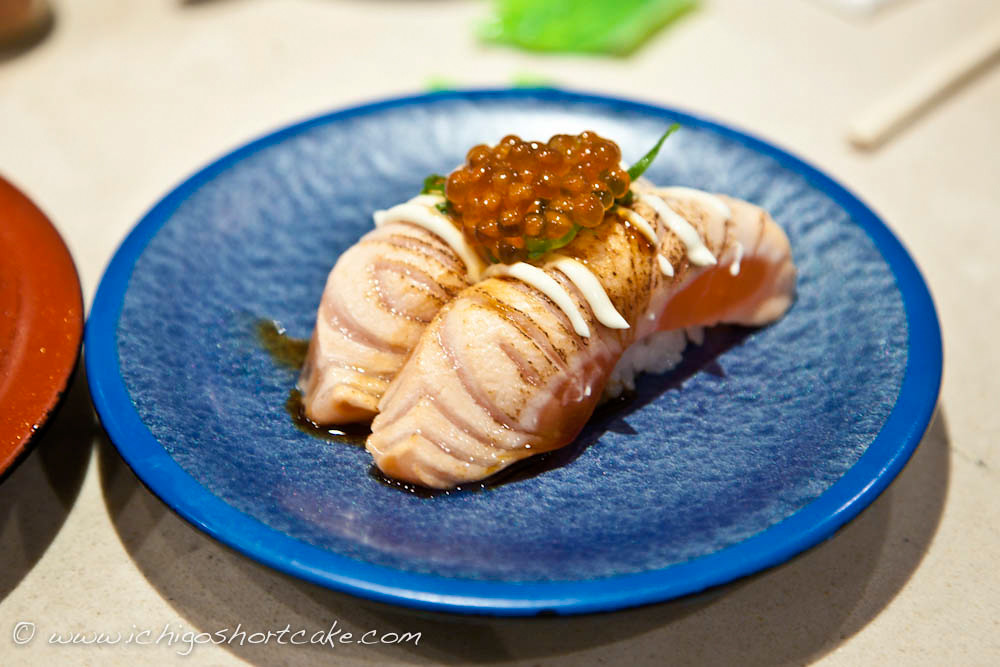
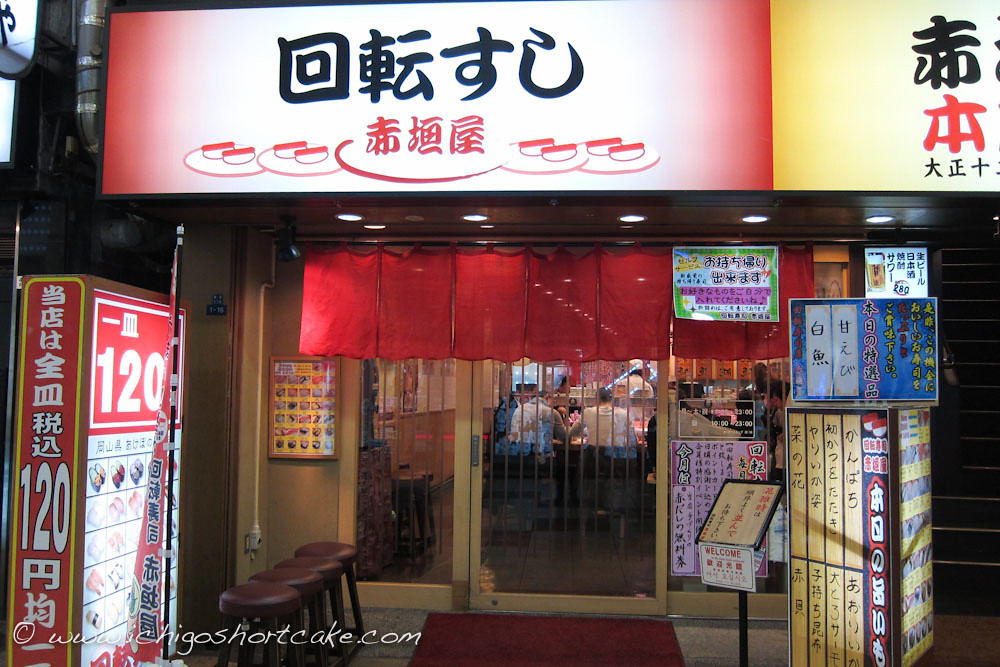
The first one we went to was called Akagakiya Kaitensushi (赤垣屋回転すし) in the Osaka Namba area. All dishes were advertised as 120Yen per plate which is just cheap beyond comprehension, for us Melburnians anyway. The seafood was fresh, vivid and tasty. I absolutely love the intense flavours that wasabi and soy sauce give the otherwise very subtle taste of sea and vinegar-ed rice. Some like it plain where you can enjoy the natural taste of raw fish and other seafood but for me, it's all about the combination of flavours that complement each other so well. I especially like a big fat dab of wasabi that goes straight to my nose and make me teary. Love it. It's especially effective against stuffy noses.
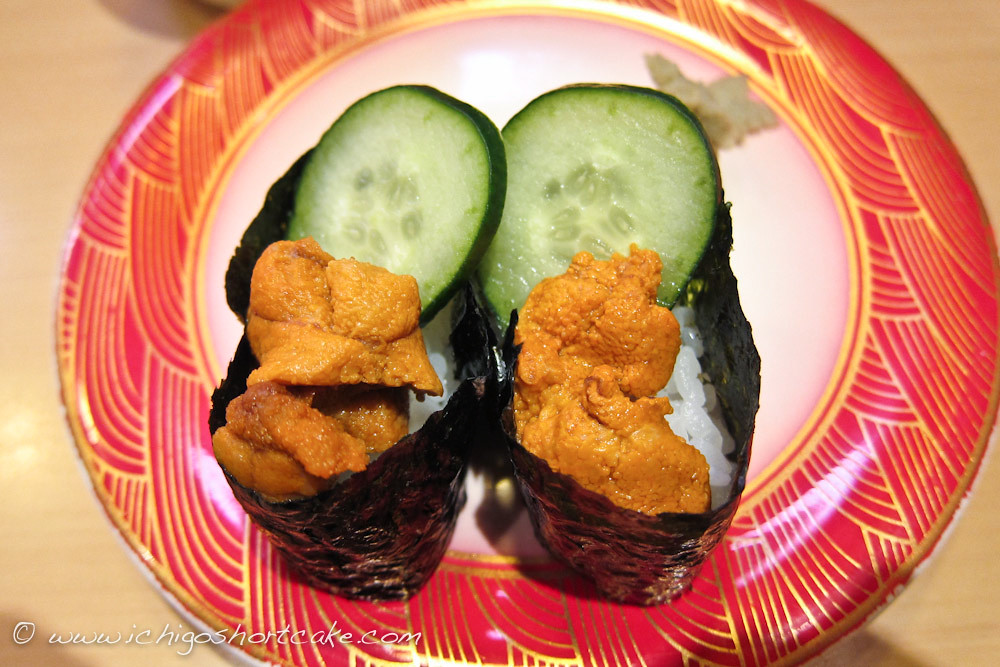
The best thing about sushi trains in Japan is the ability to grab any plate from the conveyor belt without needing to say anything remotely stupid to the waiters. That's why foreigners love these cosy little restaurants. Yes, people might look at you funny anyway but at least you can pretend to know what you're doing. Since we had already been once before, we were able to identify most of what was on offer. Our first plate was the beloved sea urchin sushi (uni) wrapped in seaweed (nori). It was as fresh as fresh can be and didn't need much soy sauce as the uni itself is already salty.
The second plate is one that most sushi eaters in western society will know about - kingfish. If you have sushi or sashimi often, you'll see three types of fish that are always used. They are tuna, salmon and kingfish. They're what I call the 'traffic lights' of the sushi world. Red, orange and uh…white. Well, almost traffic lights. I love the texture of fresh raw fish. This kingfish was just pure indulgence. It's soft enough to almost melt in your mouth and hard enough for there to be some bite. In my opinion, raw fish (as they don't have too much taste on their own) is all about the textures and freshness.

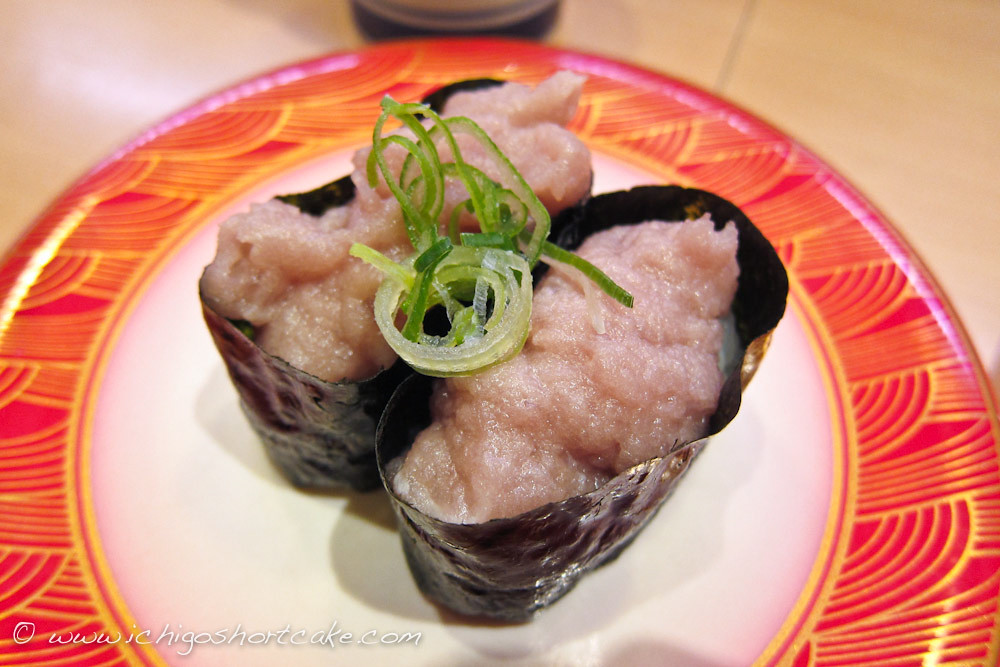
Next plate is our all time favourite negi toro (tuna belly with spring onions). We just can't seem to keep our hands and mouths away from these beauties! The toro is so juicy that it literally melts away in your mouth. Combined with the crunch of the negi and seaweed and their individual flavours, a perfect harmony is created.
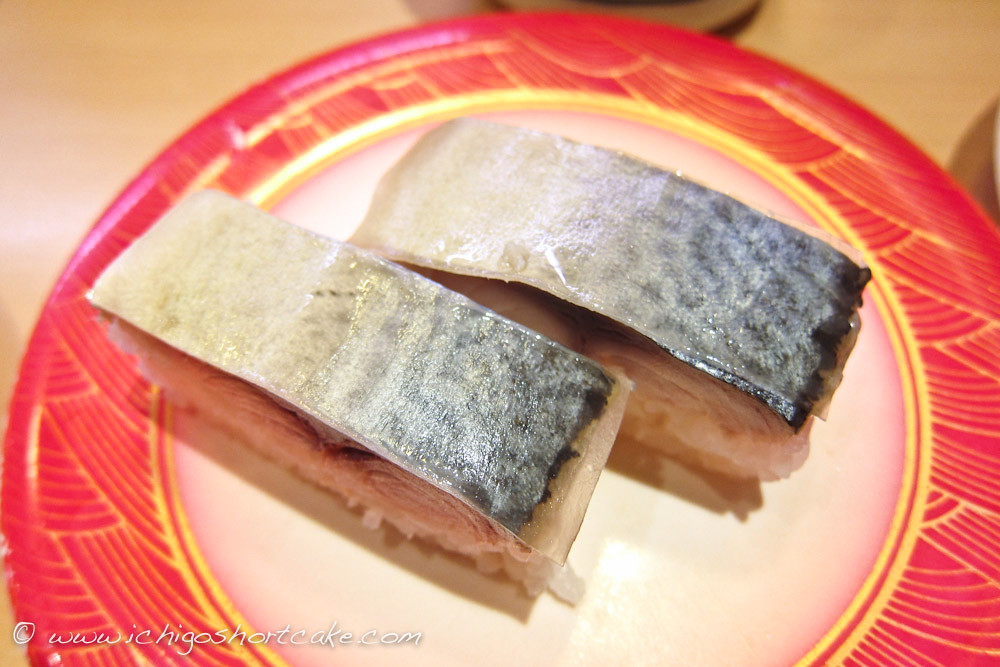
Apparently mackerel (saba) is always cured or marinated in some way. This is different to Spanish mackerel (sawara) and horse mackerel (aji) which are usually eaten raw and are sliced just before serving. This I think is because mackerel has a very strong fishy taste which might be overpowering for some people. I always get confused with these three fish. If I was in a Masterchef elimination and I had to identify which was which, I wouldn't be able to do it to save my life. But now at least I know that saba is cured. I must admit, saba's not my favourite type of sushi. Even cured, it still has a very pungent aroma of the sea which can only be described as 'fishy'. However, Yuye seems to love it.
Sweet prawns (ama ebi) is also one of those lovely sushis that highlight the greatness of fresh seafood. You can eat it without dipping any sauce and still have this subtle sweet taste that lingers in your mouth. It's a shame this was the only time we had prawns on the trip.

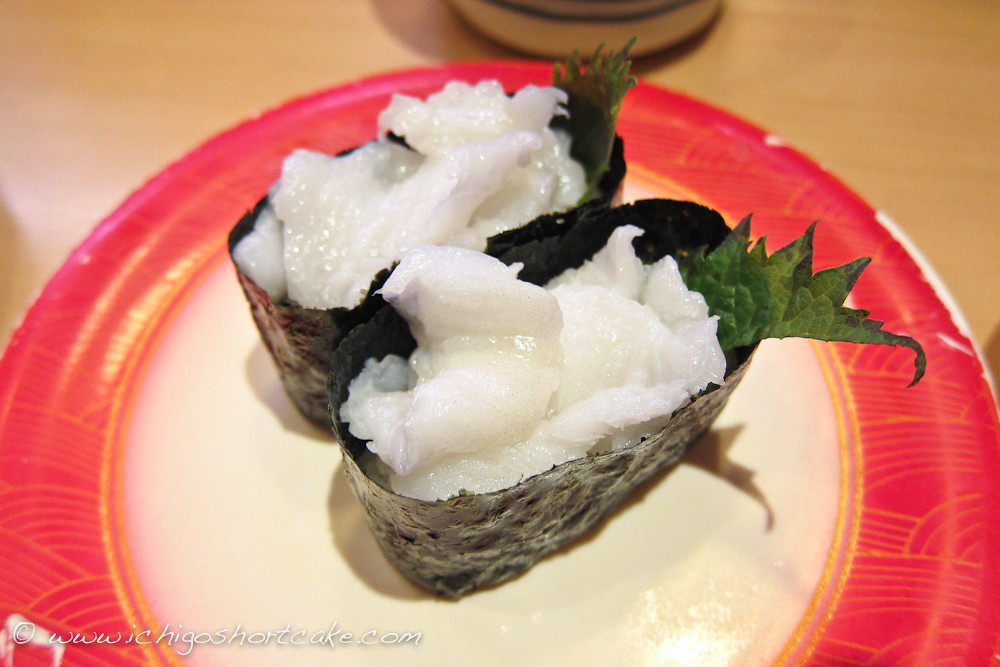
Just when I started to think that I'm getting better at identifying my sushi, this one comes along. What in the world was it? I can't even tell whether it was fish or some sort of shellfish. If someone can kindly tell me, I'd forever be in your debt.