Showing posts with label Travel. Show all posts

Takayama, Japan - home of beautiful sake and wagyu

Continuing on from our journey through Japan and my last post about Shirakawago - a secluded village up in the mountains - Yuye and I head back to Takayama for some sake (Japanese rice wine) action. Takayama is famous for its sake and historic Japanese structures.


Apparently there was an earthquake during our bus ride back and we didn't feel it. The lovely owners at the ryokan (Japanese style hotel) we stayed at - Hanaoka Ryokan - asked us about our wellbeing when we checked in and that's how we found out. For those of you who missed the earlier posts about my Japan trip, we got to Japan the day after the massive earthquake on March 11 last year. Throughout our trip, there were smaller magnitude earthquakes but we were lucky enough to not have felt any of them. To keep the post a bit shorter, I will post about the hotel next time.

Map courtesy of www.japan-guide.com

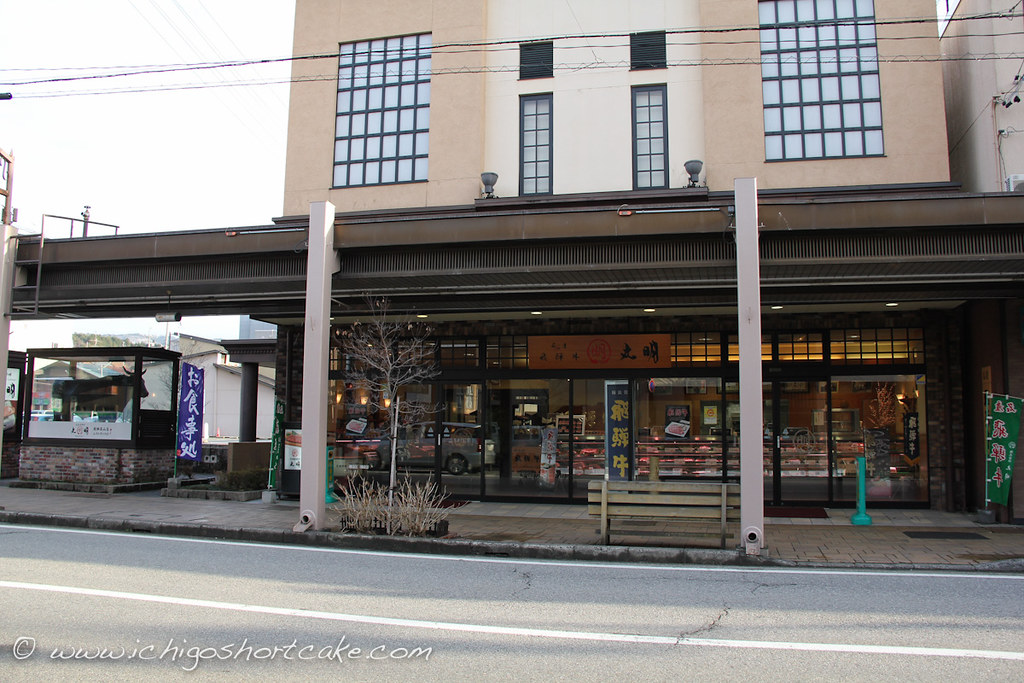
When we arrived in Takayama, we were starving. After dumping our luggage, we headed out to the city centre in search of food. Upon passing a specialised wagyu
(Japanese marbled beef) shop called Maruaki, we agreed in unison that we'd have lunch there. Although we had a tiny taste of Hida beef (wagyu from the Hida region) in Shirakawago, it wasn't very high grade and wasn't a big portion either.


Maruaki has a butcher downstairs where you can pick and buy different cuts of meet to eat in the restaurant or to take home and cook yourself. If you're renting a place with a kitchen, this might be a good option as it is cheaper. The restaurant was fairly large and was busier than I thought it would be. After the earthquake, many tourists cancelled their pre-planned holidays and left smaller towns sparse of people but it didn't seem to affect this restaurant as much.


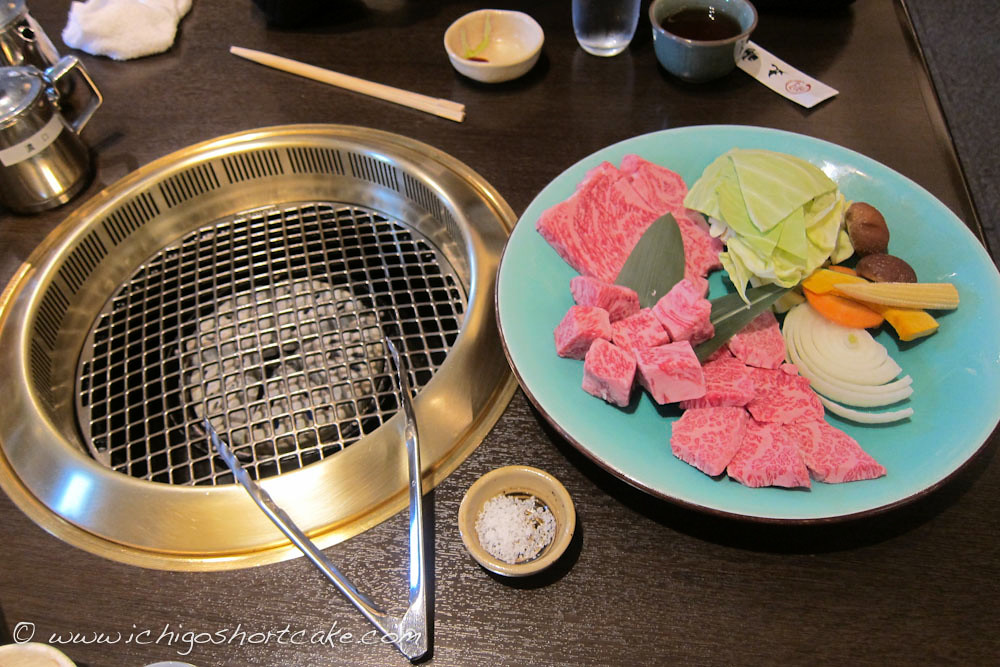
We ordered a set menu for two and cost roughly $50 for the both of us. It included a large plate of different wagyu cuts which we cooked on a hot plate like Korean BBQ, miso soup and veggies. No rice came with it so we got a large bowl of rice to share for 250Yen. The colour of the meat's a bit off as I didn't set my camera properly - it's meant to be more pink than red…oops. :P That's what happens when I don't take out my DSLR!


Kyoto Day 2, Japan - Golden Pavilion & Fushimi Inari Shrine

I realised I haven't posted about my Japan trip in quite some time so it's time for a new one. I'm very slowly going through all the photos and I'm now a little over half way through the trip. Phew. I always tell myself to not write as much for each post but somehow it always ends up being very long. There's just too many things I want to share with all of you! This post follows on from Kyoto part 1 where I talked about Kiyomizudera and the light up festival.

Brunch & first night dinner

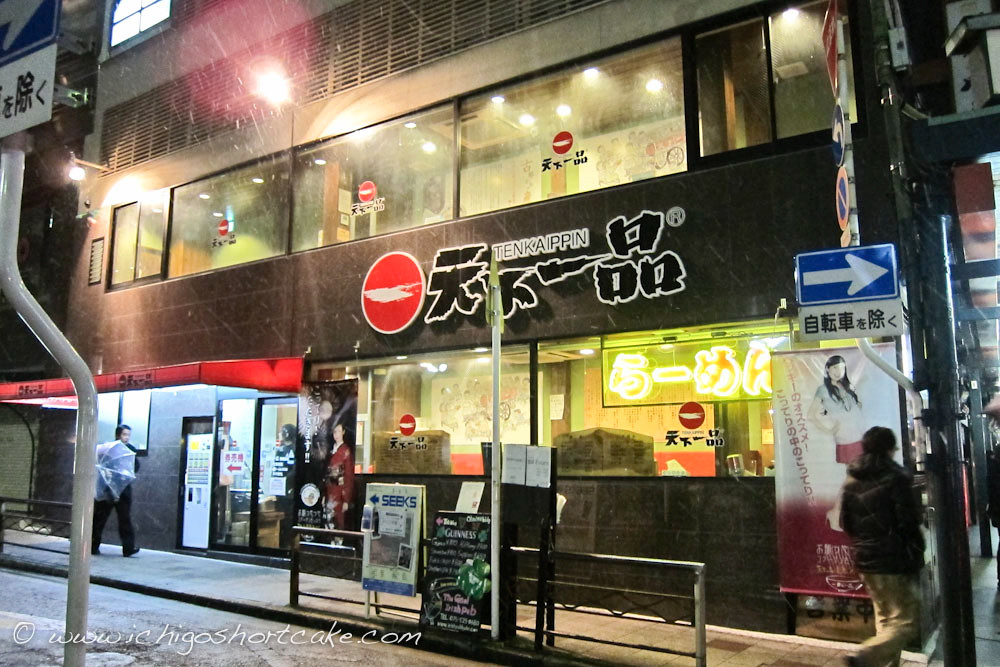
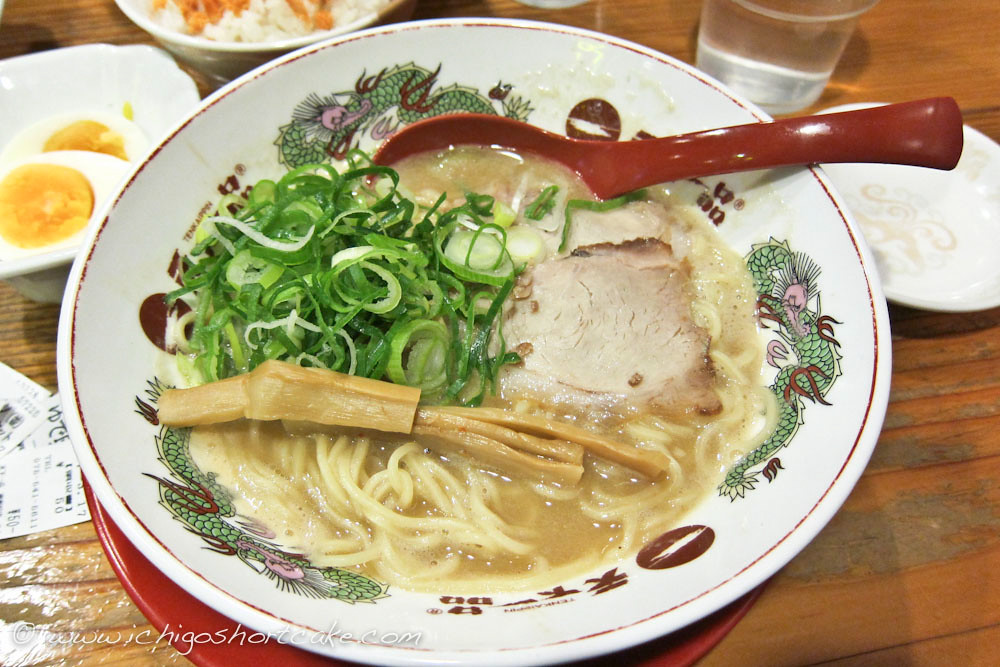
It is now the second day Yuye and I were in Kyoto and day 7 of our trip. As always, we woke up quite late and only had enough time for brunch. There were many restaurants mind you but Yuye liked what we ate on the first night here (the night we arrived it was already 11pm and this place was one of few still open) so much that we decided to go eat there again. It was a restaurants called Tenka Ippin (天下一品) which is a famous ramen chain across Japan. There are many outlets that can be found on their website, although it's in Japanese. The one we went to was the Minamiza Zen Shop (南座前店) right around the corner from where we stayed.
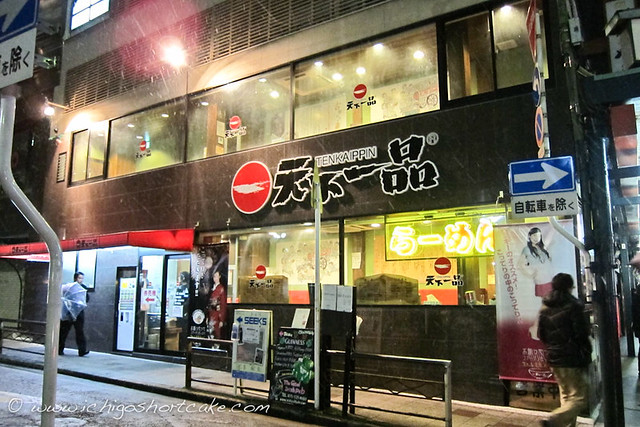


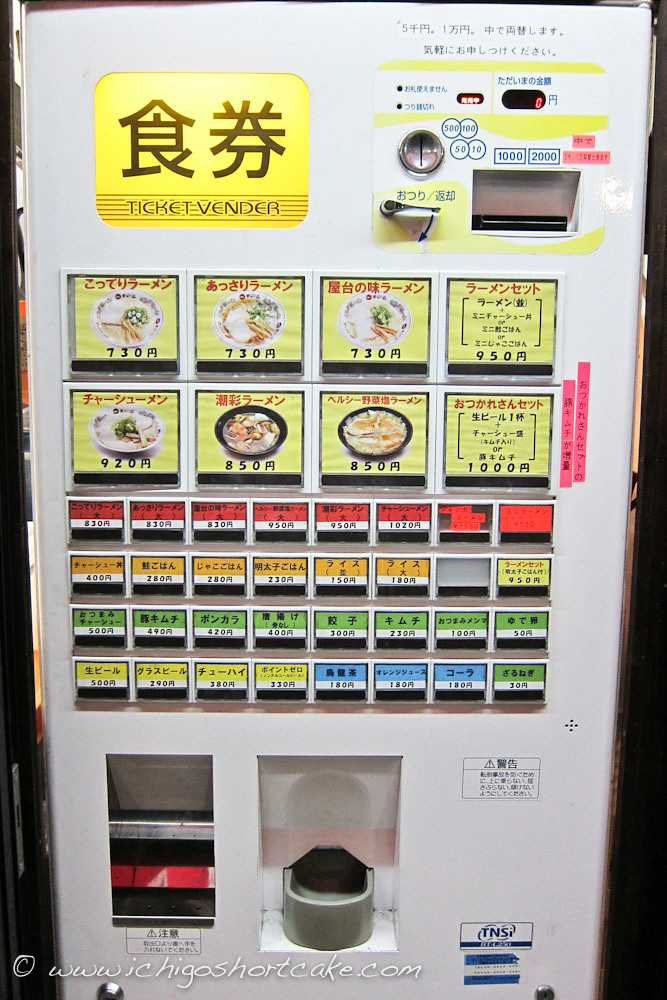
It's another place that uses an automatic ticket vending machine as the ordering system and you simply pass the tickets to the waiters as you enter the shop. It wasn't the most western friendly, however there are a few photos of the most popular dishes.


On the first night I just ordered the Chashu Ramen (920 Yen) which is the 2nd one down on the left. Not the cheapest out there but then Kyoto's mostly more expensive than Osaka and a lot of other cities in Japan anyway. It was a very delicious ramen. The broth was thick and full of porky goodness and hit all the right spots. I was a happy person.


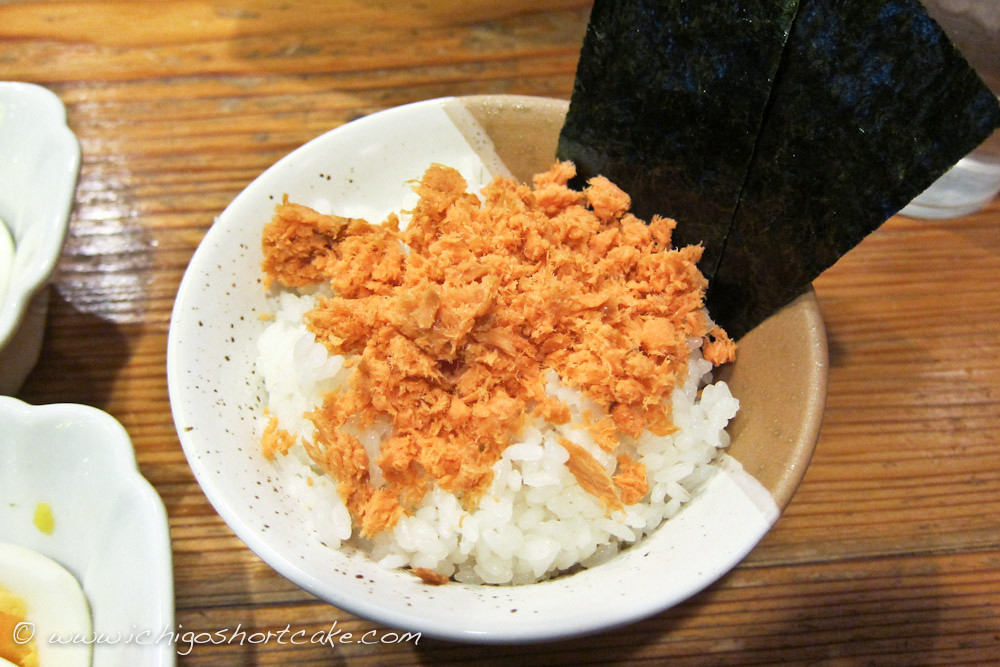
Yuye ordered the same as me except in a set with an extra mini rice topped with dried salmon flakes for only 30Yen more. Why didn't I get this as well? The rice was also quite nice although not as spectacular as the ramen itself.


As a side we ordered a set of 6 gyoza for 300Yen. Don't be fooled by the slightly charred surface, it was actually quite tasty and well seasoned. The gyoza were put upside-down to prevent the crispy bottoms from getting damp in the juice and heat.


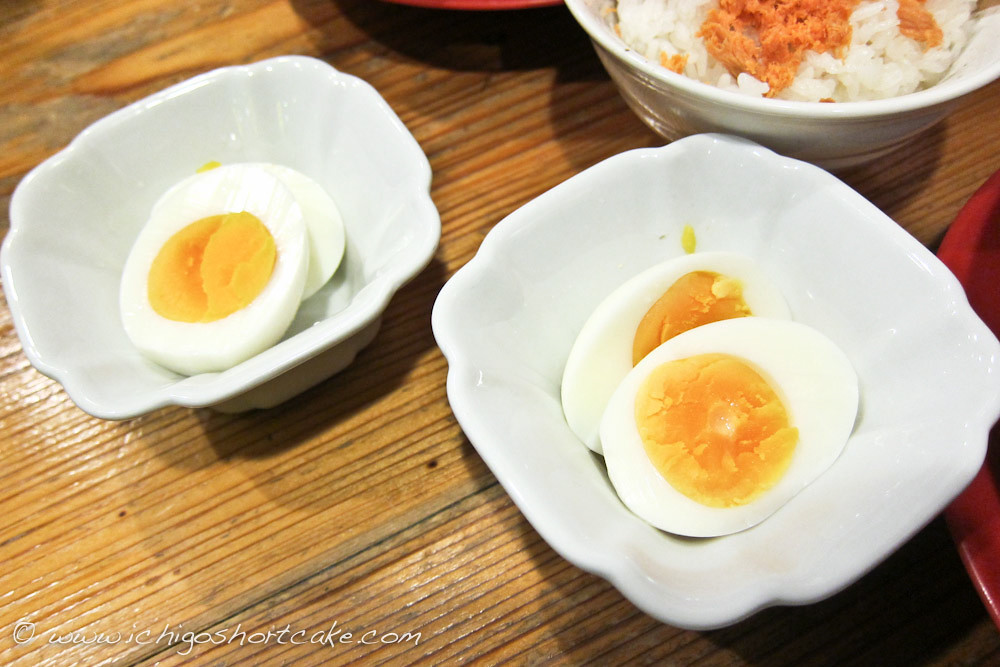
Dinner didn't end there. We also ordered two boiled eggs for 50Yen each. The yolks weren't as runny as I'd have liked but were still very nice. At least it wasn't overcooked. I dislike hardboiled eggs with powdery yolks. We just put the eggs in our ramen soup which soaked up all the flavours. So delicious!


For brunch on the second day in Kyoto, I ordered another ramen, this time it was the Assari Ramen for 730Yen which consisted of two pieces of chashu and a clear soy broth compared to the usual tonkotsu (pork bone) broth which is more milky in colour. This one was a bit oily. You can see floaty white bits on the top which, don't be alarmed, are pork fat and lots and lots of garlic. Gosh that was a lot of garlic, but it was so tasty! I love garlic.


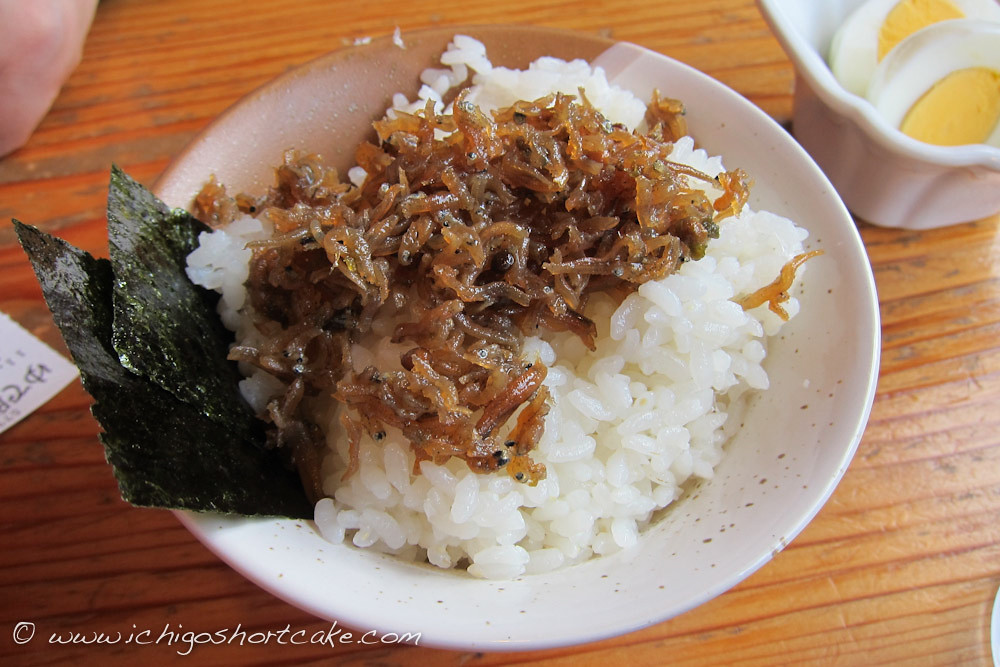
Yuye ordered the usual chashu ramen with the mini rice set. This time the rice came with whitebait as a topping. I liked the salmon rice better but this one was also quite nice. Definitely worth the 950Yen that's for sure. Oh and of course we ordered eggs again, how can one not eat eggs with their ramen?


Tenka Ippin - Minamiza Zen Shop (天下一品南座前店)
For more shops visit website


Kinkakuji - the Golden Pavilion (金閣寺)


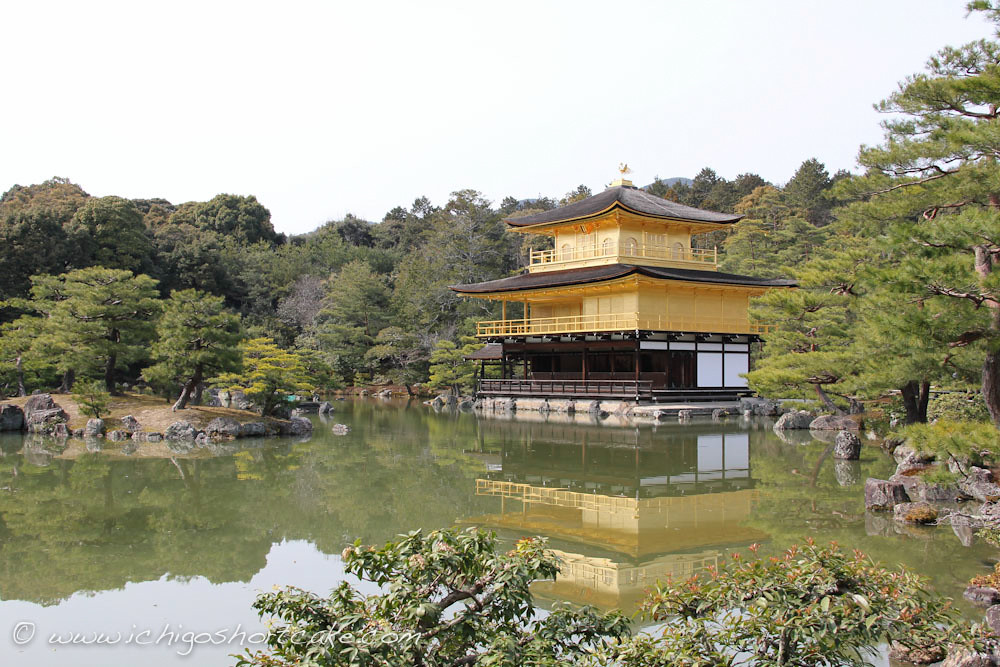
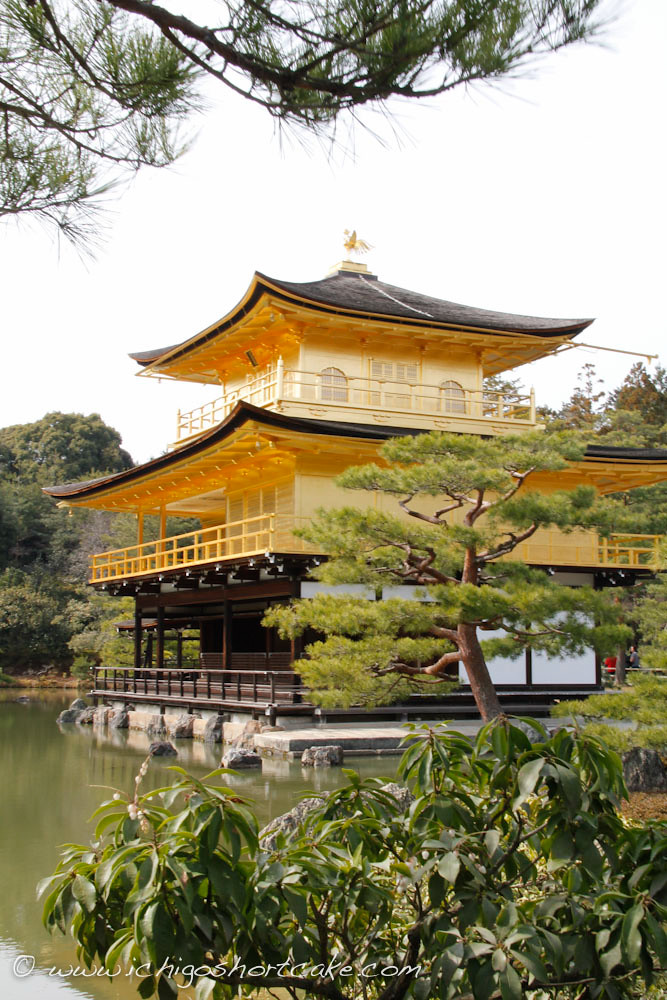
After brunch, we proceeded to Kinkakuji, probably the most well known and photogenic temple of all the ones in Kyoto. This wasn't as fabulous for me since I've been once before and I can tell you, there's nothing at this temple apart from taking photos of the main floating pavilion which is said to be covered in a layer of gold. The pavilion has been heavily damaged on several occasions in the past, the most recent time was in 1950 when a monk set it on fire. The current pavilion was rebuilt in 1955. There is also a similarly named temple called Ginkakuji - The Silver Pavilion not too far away, however this temple is not covered in silver.
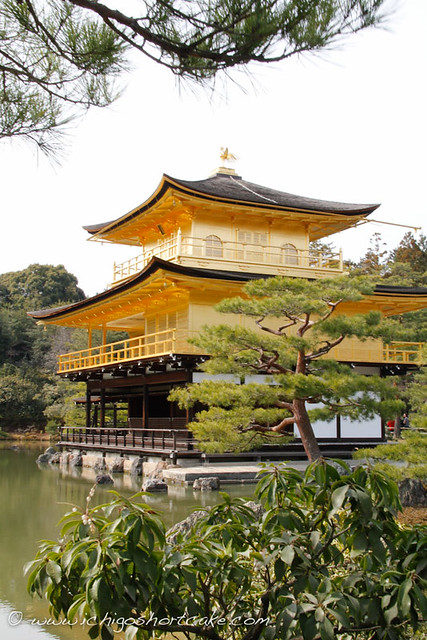

We took bus number 15 (I think) because it was right outside where we stayed and it conveniently passes right outside Nijo Castle, a former residence of Tokugawa Ieyasu, the first shogun of the Edo Period, although we didn't have time to stop by. The trip did take a long time, roughly 40-50 minutes so take a bus if you have enough time on your hands. Each bus ride costs about 200-240Yen, so if you're travelling multiple times in a day, it's worth buying the daily ticket which costs 500Yen. Bus tickets can be purchased on the bus or at many hotel receptions. Bus is probably the most convenient form of transport in Kyoto (or walking) as it runs throughout the city, however if you're short on time, it's probably better to take a train and then taxi. For more bus information, please visit Kyoto City Bus Guide and this pdf version of the map.

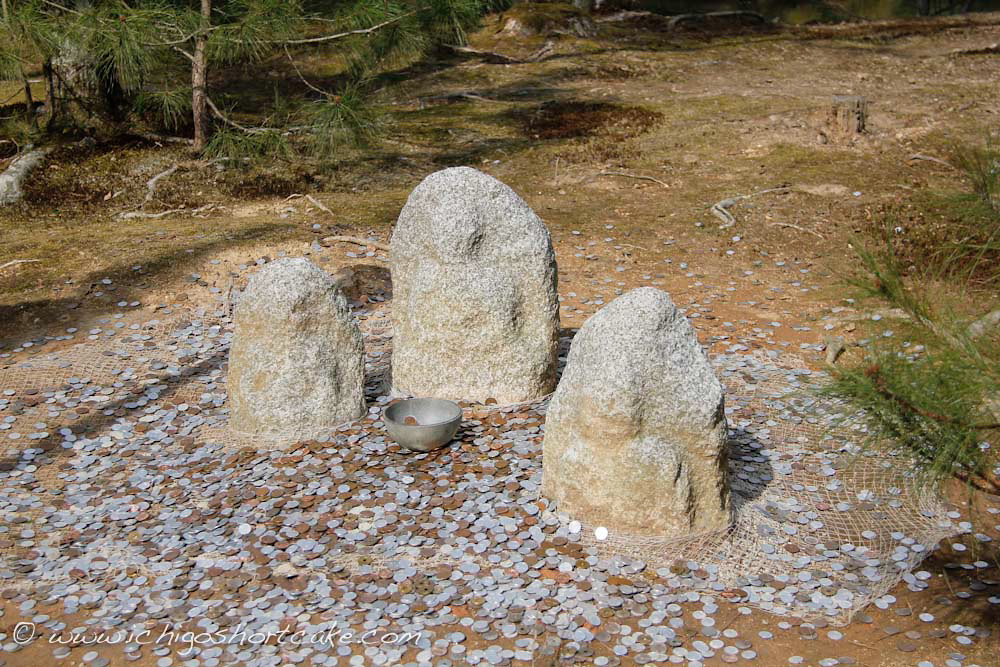
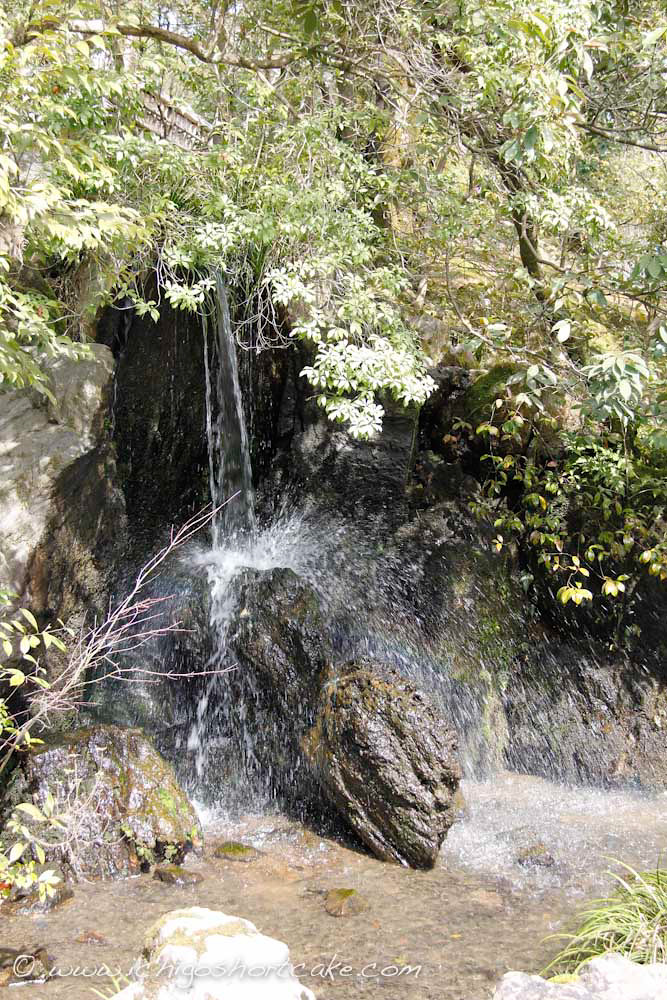
A few other photos I took while there:


Fushimi Inari Shrine (伏見稲荷大社)


As it was still cold in Japan, the sun set reasonably early. We were running short of time to visit one of my favourite places in Kyoto - Fushimi Inari Shrine. We caught bus 101 straight to JR Kyoto Station, then took the JR Nara Line to JR Inari Station where the shrine is located. It's only 2 stations away from Kyoto Station and might be a good stop over if you're heading to Nara from Kyoto or vice versa.


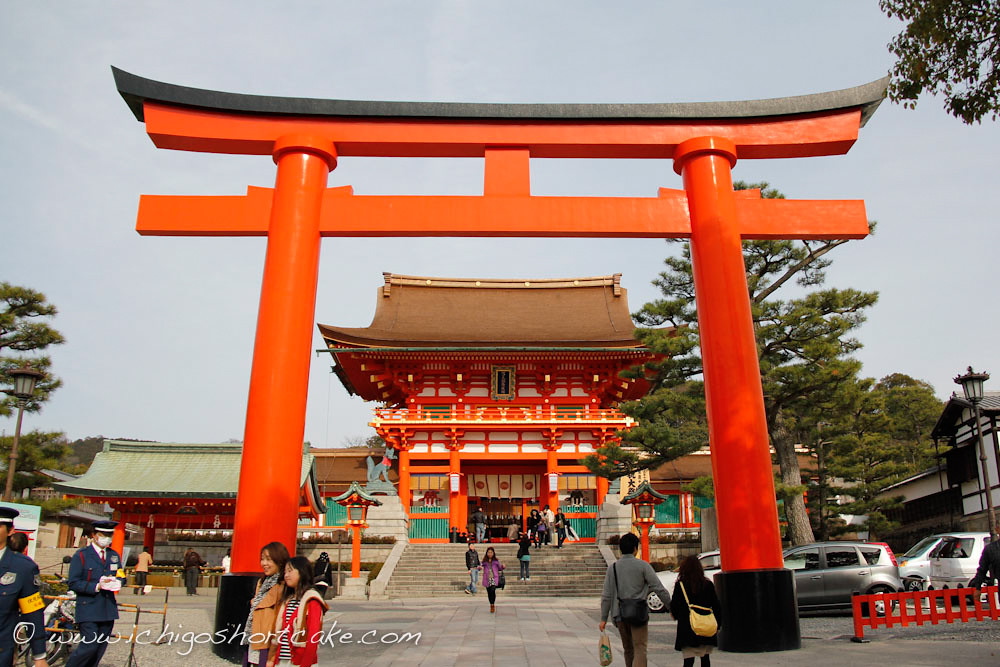
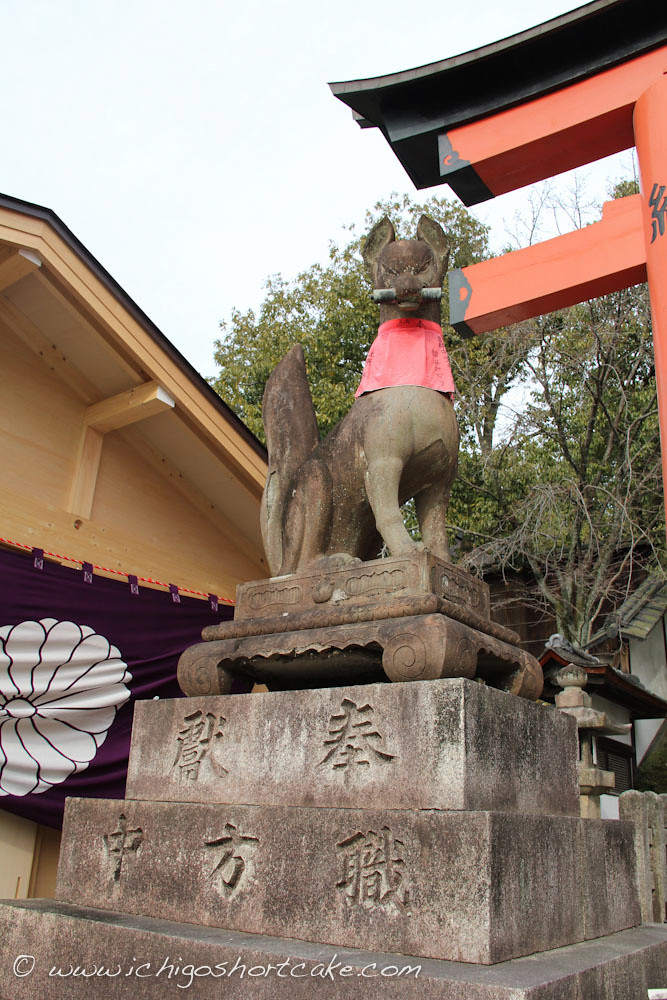
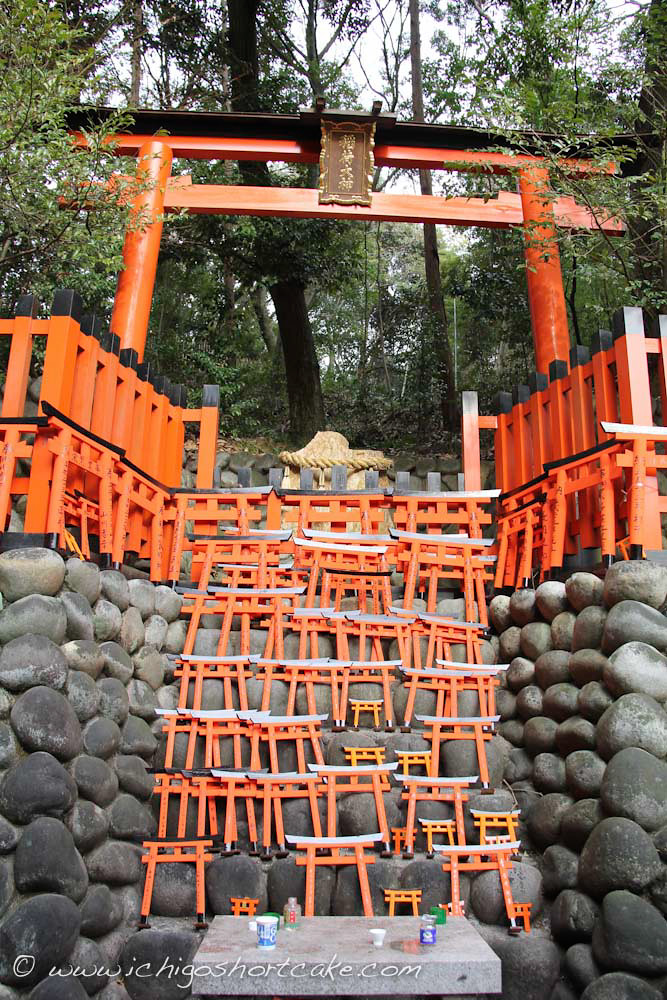
Fushimi Inari Shrine is the dedicated to Inari, which is the Shinto god of rice. It is protected by foxes (kitsune) throughout the grounds as foxes are thought of as messengers of Inari. You can purchase miniature gates and fox statues at the stores just outside the grounds of the shrine.


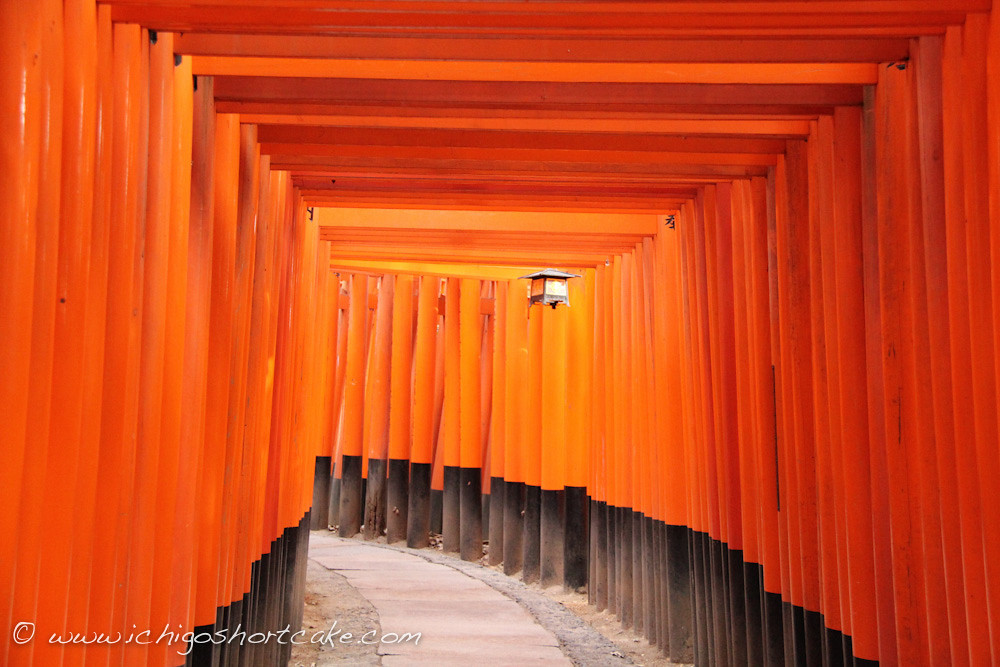
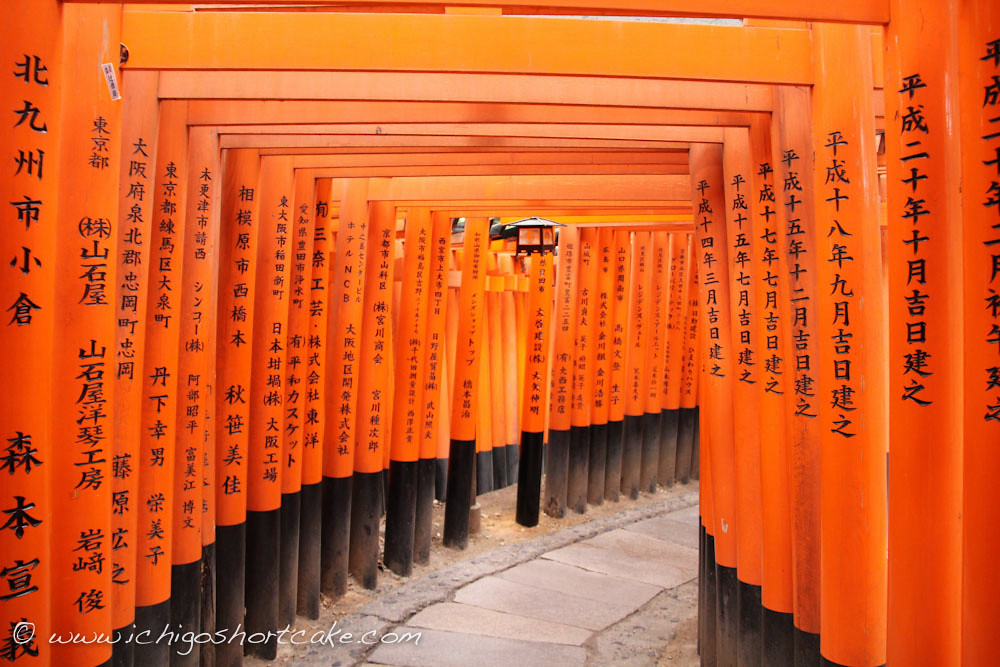
The main attraction for this shrine is its thousands of torii gates which cover many paths leading up Mount Inari. One of the most photogenic shrines in Kyoto in my opinion. Each torii gate has been separately donated by someone and thus there are names and donation dates carved into each one on the back. According to www.japan-guide.com, the donation amounts range from 400,000Yen for a small gate to over 1millionYen for a large one. That's a lot of donated money since there are countless torii gates! It just comes to show how dedicated people are in Japan to religion.


Of course, even smaller torii gates are available for those of us who wish to donate but are limited by budget. These are all over the place really, too many to even take photos of.


Kyoto, Japan Part 1

Accommodation - bAKpAK Gion Hostel

Kyoto, the city of geishas, historic temples and old streets was a surprisingly expensive place to visit. Well, I guess it was understandable since it's a 'must visit' destination for anyone visiting Japan for the first time. For me it was my second so it was somewhat less charming and a bit familar. As it was Yuye's first, I thought we had to visit just as a matter of formality.
The expensive factor could clearly be seen just based on the accommodation available compared to its neighbour Osaka (just 20 minutes away by Shinkansen). I'm not sure whether it was because of the 'Light Up' festival that just happened to be in town but the cheapest accommodation I could find was a crappy, smelly and not so hygienic hostel called bAKpAK Gion Hostel. Even then it was $75 per night (my proper hotels in Osaka cost less than this). The better hotels were ridiculous in terms of price, especially in such a central location (Gion in pretty much the centre of all the hustle and bustle). The hostel was by far the worst I've been in (I've travelled quite a bit but I must say hostels were never really my thing). It was shared toilets and bathrooms and no elevators. Yuye and I had to carry very heavy luggage up 4.5 levels before we reached our dingy old room. The only slippers left by the front door were a pair of almost broken ones and 2 right foot slippers (which Yuye used). Although uncomfortable to say the least, I managed to get a bit of entertainment from watching Yuye clumsily walking around with his pair.


There were no receptions at this hostel, the reception is at their other location just about one block up the road so you can imagine that this place is probably a little bit neglected. Anyhow, the view out of the window was somewhat decent although the road just downstairs was quite busy and there were loud traffic all throughout the night.


Never again will I stay at a hostel like this, I've learnt my lesson that hostels are not my thing, especially not shared toilet/bathroom ones. I had this revelation not from the slippers or smelly room and corridors but rather the odd morning story of me sitting in the shared toilet when this toddler knocks on the door and asks 'daddy, are you in there?' and I answered in a tiny voice 'umm….no….sorry.' The dad yelled out 'sorry, hope my kid didn't disturb you!'. No, I don't particularly like having a conversation with strangers when I'm in the toilet thank you. Then I head downstairs to the showers where the sink is because there were no sinks at the toilet to brush my teeth. Fantastic. I see a half naked white man walk out of the shower and he greeted me. Nice fellow but yet again not the kind of scenery I'm in Kyoto to enjoy. A better option would have been to stay in Osaka for the whole duration and shinkansen to Kyoto for day trips which only takes 20 minutes each way.

The temples and shrines & Higashiyama Hanatouro 2011 東山花灯路 (light up festival in Higashiyama, Kyoto)

The Hanatouro is meant to be an annual light up festival in two areas of Kyoto (Higashiyama and Arashiyama). Higashiyama is where Gion and the city is located and is where we were. About 2500 lanterns along the walkways connecting various temples were meant to be lit up at night along with the illumination of major temples and buildings. This year, although the temple grounds were illuminated, the lanterns were sadly not in order to conserve electricity after the big earthquake. Although I didn't get to bathe in the glory of all those lanterns, I did manage to catch a glimpse of magnificent temples otherwise un-enterable in the dark.

Our itinerary for the day went something like this: walk around Gion and look at shops, lunch, walk to Yasaka Shrine during the day, walk to Kodaiji Temple and Ryozen Kannon (right next to Kodaiji Temple), walk through the preserved historic streets of Higashiyama, passing by beautiful food and souvenir shops and finally reaching Kiyomizu-dera. After dark, we returned inside Kiyomizu-dera for the light up show, walked outside along the path we came and went all the way back to Yasaka Shrine to end our day. Dinner came after of course.

Kiyomizu-dera (清水寺)

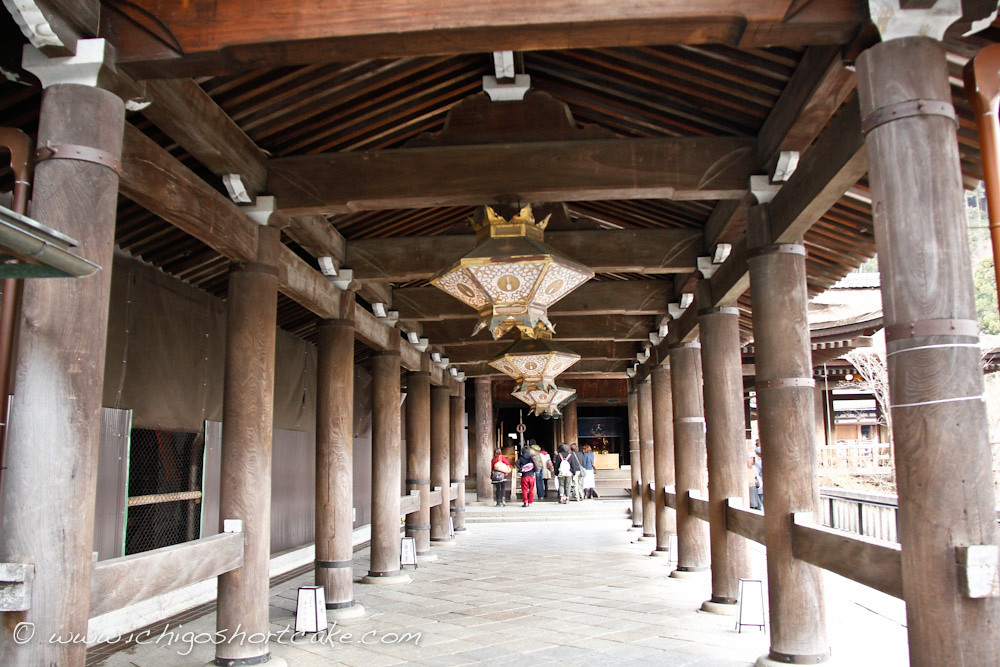
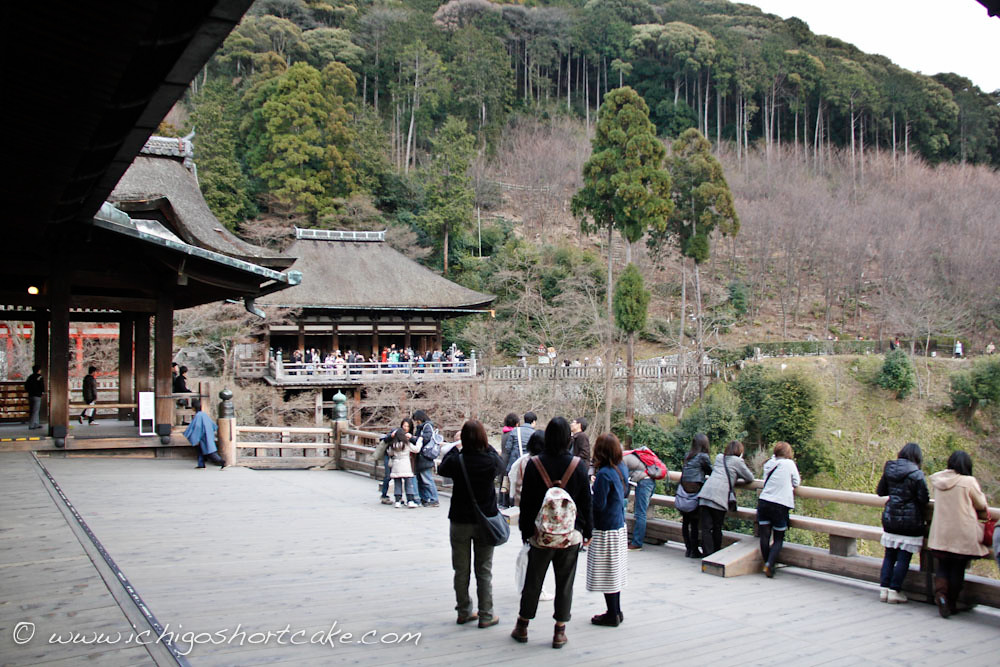
Kiyomizu-dera is probably the most popular and famous tourist destination in Kyoto. The temple is set on top of a hill and overlooks the city with magnificent views especially at dusk. It's a Buddhist temple that dates back to the year 798 and there no nails whatsoever were used during construction. Kiyomizu-dera is especially beautiful during Spring and Autumn when sakura trees and maple leaves are present, however, we had just missed the sakura season by around 2 weeks.

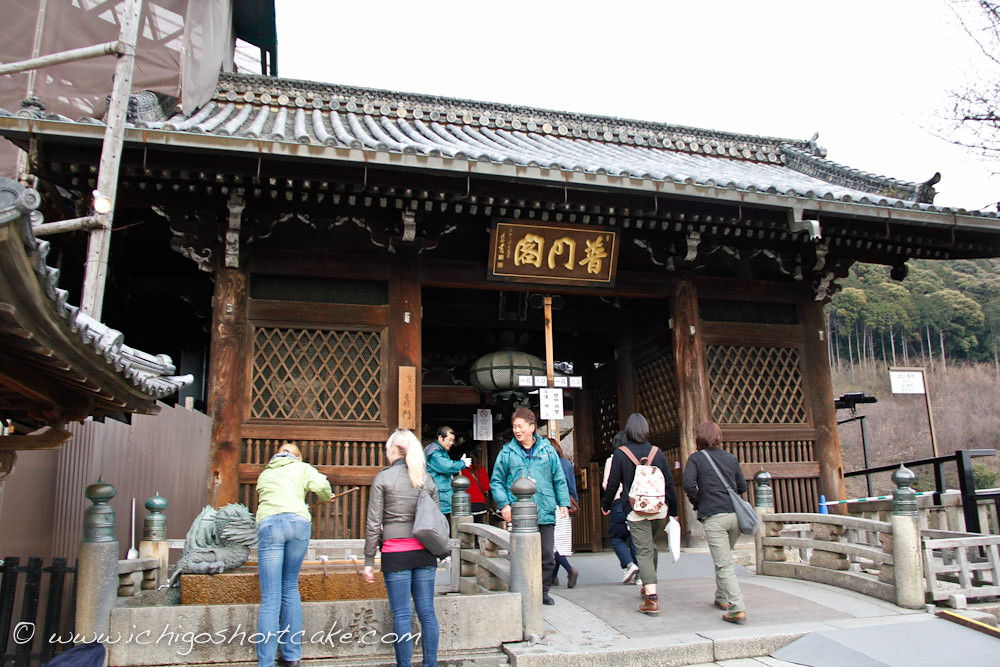
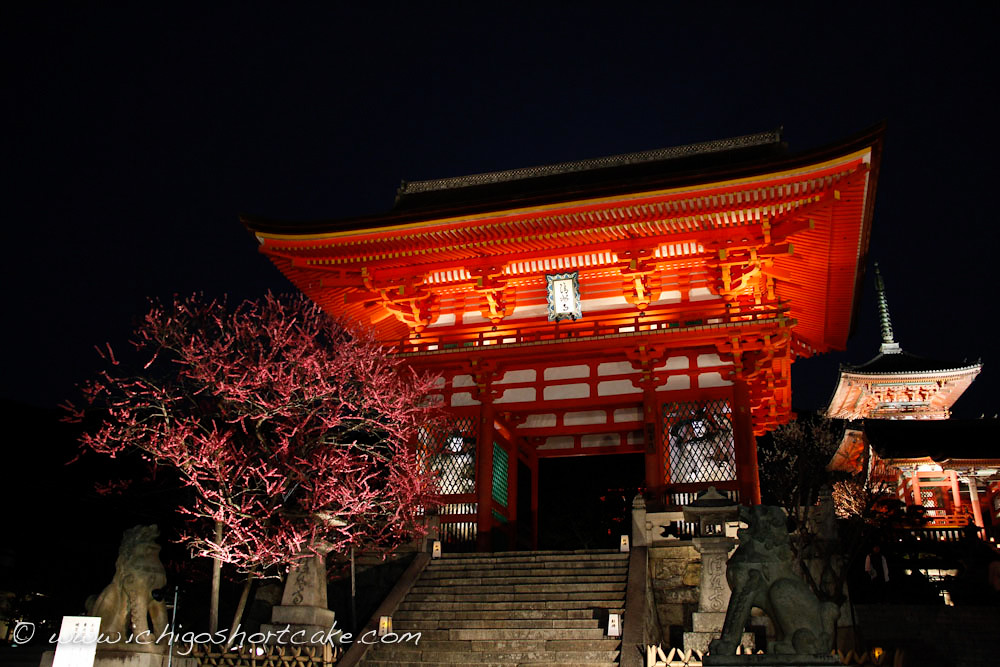
Main gate of Kiyomizu-dera
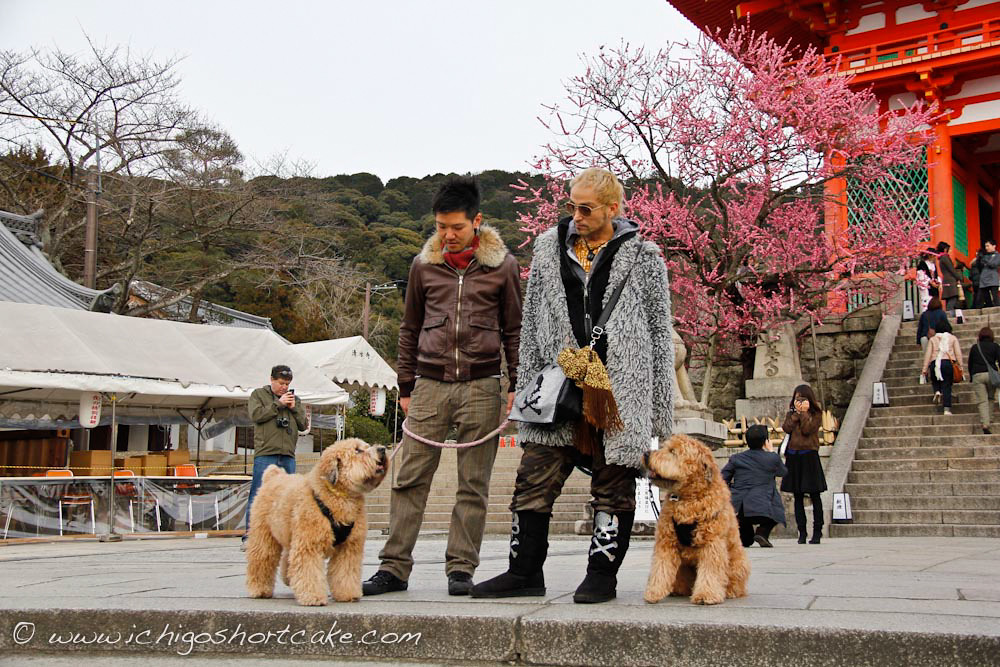
I instantly fell in love with these dogs!! Even the owners look like they're posing for photos :D
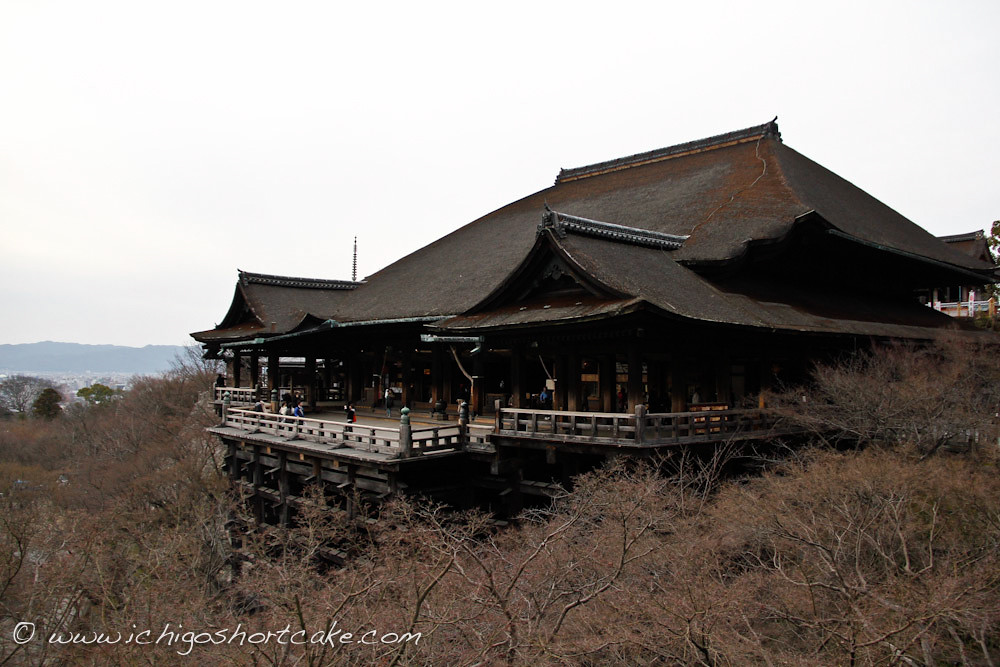
The most famous shot of the temple. It's built around 13 metres off the ground.

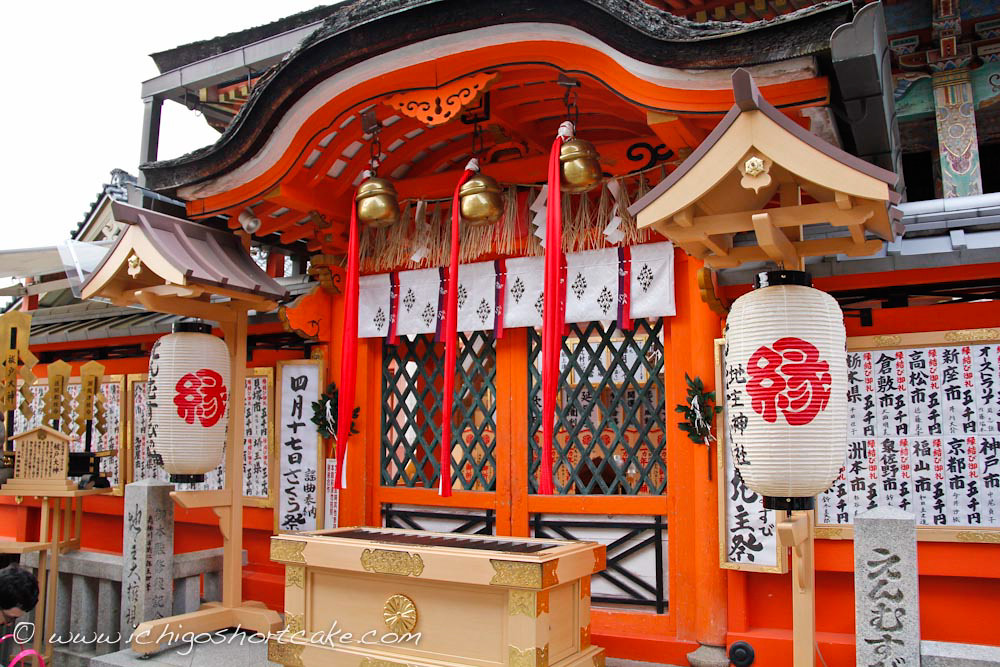
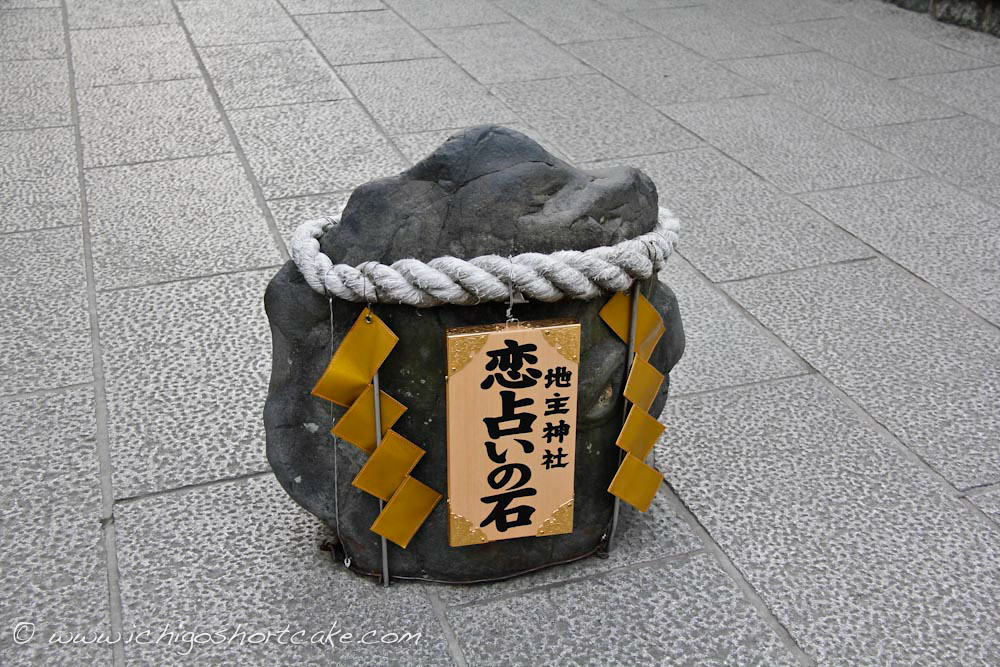
There are many smaller shrines and halls within the grounds of Kiyomizu-dera. One of them being Jishu Shrine which is dedicated to the deity of love and matchmaking. There are two 'love stones' in the shrine that are 18 metres apart and if one can walk with their eyes closed from one stone to the other then they are said to have luck in love. I didn't dare do the walking, partly because I'm very clumsy and would probably have fallen over before I'm anywhere near the other stone and well…perhaps I was a little afraid to find out in case I have bad luck.

One of two 'love stones' in the temple, if you walk with your eyes closed from one to the other, it's said you have good luck in love.

At the foot of the main hall in Kiyomizu is Otowa Waterfall. It's a very popular tourist spot where people stand at one of the three streams and drink the water using the ladle. It's suppose to bring good fortune in health, school and love depending on which stream you drink from.

Otowa Waterfall, there's always a big line to drink from one of the streams to get good luck.
Girls dressed in kimonos, ready for the Hanatouro festival (which sadly was partly cancelled).

Entrance into Kiyomizu-dera costs 300yen per person and is open from 6am to 6pm everyday of the year.

During the Hanatouro, Kiyomizu-dera is re-opened to the public at 6:30pm with an additional 400yen per person entrance fee where you can enjoy the night view of the city from the top of the temple as well as the illumination show inside. The light up is magnificent even if you don't go inside and is highly recommended if you're in the city during the festival. There is also another light up show in Autumn between mid November to early December.


2 weeks of suffering & Hiroshima, Japan

I just had the worst 2 or so weeks, frantically running around assisting dad and my brother with their stolen passports, money transfers and constant ear bashing with their complaints and sulking. The story is that dad went with Jeff to Italy for a music competition and had their most valuable bag stolen in Rome Airport along with…well, everything.

If I had known this was going to happen, I would have told dad to not go outside Rome Airport for a smoke and leaving Jeff solely responsible for the oh-so-important bags. I would have also not packed dad's new ipad 2, iphone, Sony video camera and my beloved Canon S95 into the later stolen bag. Nothing can be worse than running around during the day sorting out all these problems and then having to stay awake anywhere between 4-7am talking to dad on Skype due to time differences between Melbourne and Italy. Thanks to that I am now quite jet lagged as well. This was the first time and hopefully the last that I have to go through such an ordeal. So sorry to all my readers for my absence during this time, the ordeal is now over and I can finally get back to my normal life. At least I've gained a certain amount of knowledge about what to do next time, so if you ever run into such an unfortunate event, feel free to ask me for advice.

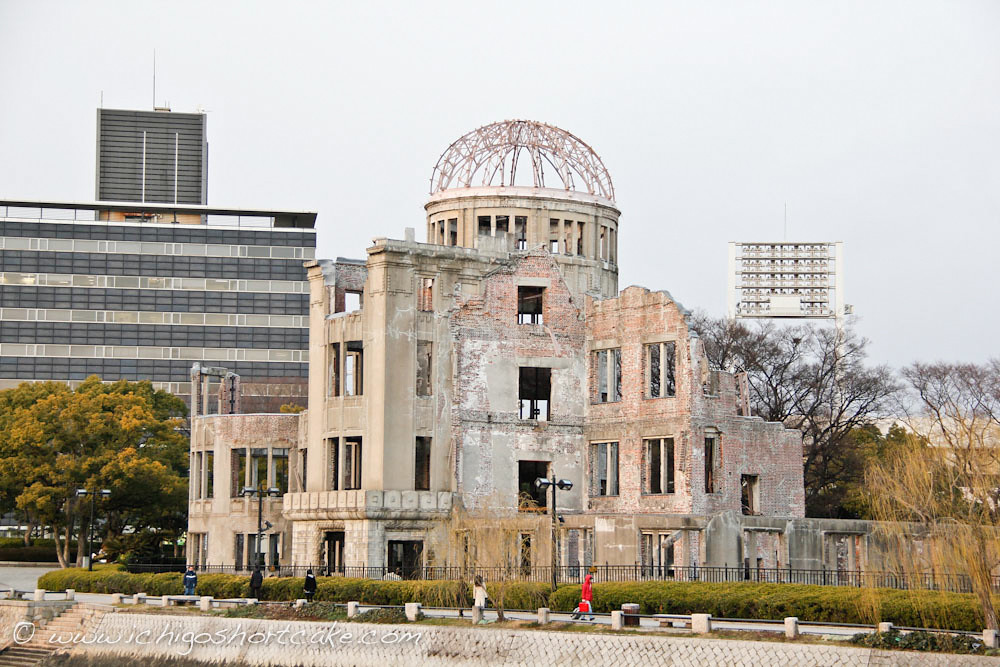
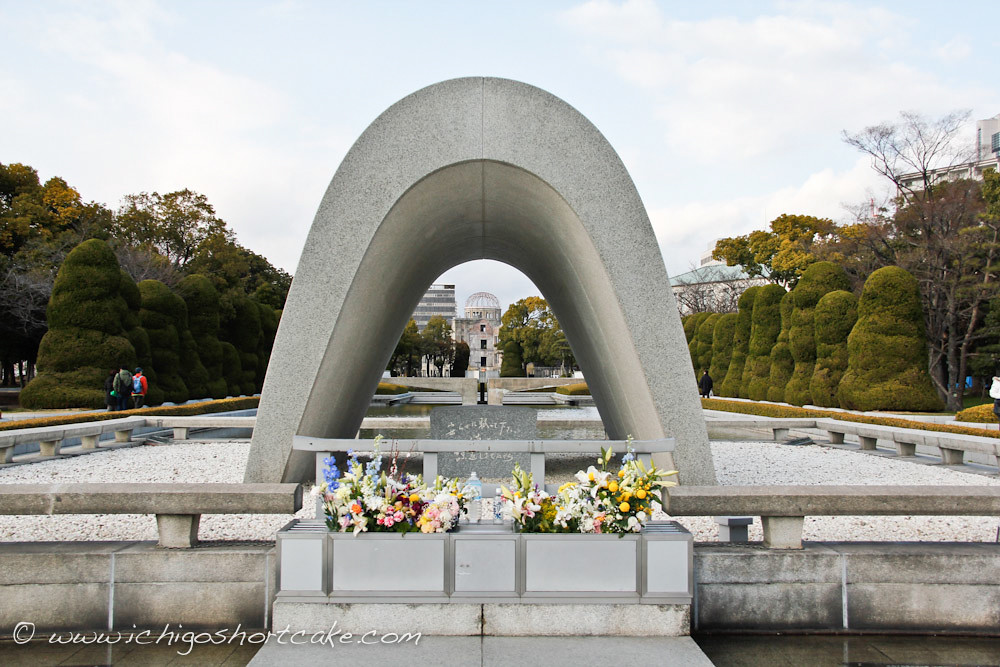
Ahem. So I had been wanting to continue my significantly more glamorous trip to Japan from where I left off last time (Miyajima). After Yuye and I left Miyajiama, we stopped very briefly in Hiroshima. Although it was a very rushed experience, we did manage to quickly walk through the Peace Memorial Park, a major landmark in remembering the Hiroshima bomb attack back in 1945. Yuye didn't want to go to Hiroshima in the beginning for reasons that I understand - it wasn't exactly the most fun or happy place to visit. However, as it had such a historical significance, I wanted to visit just that once.


A-Bomb Dome - one of the only buildings left standing after the bombing
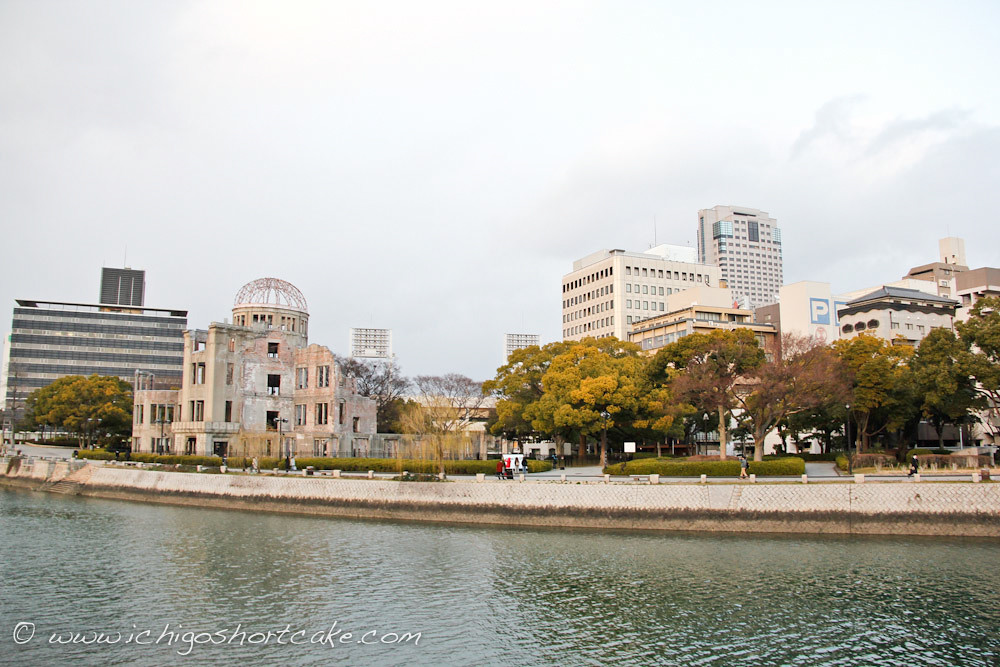
The Dome in contrast to the recovered city and new buildings
Peace Memorial Museum


Miyajima, Japan - Part 2

Miyajima in the Hiroshima prefecture of Japan is a spiritual place with a handful of gorgeous shrines and temples that will impress even the hardest to please travellers. It also has a wonderful small street full of local specialties and beautiful snacks and a mountain with breathtaking views and a romantic manju making course. It's a fantastic side trip from Hiroshima or even Osaka or Kyoto as it is quite easy to get to from all these major cities. Visit my previous Japan trip post to find out about transport and the wonderful ryokan that we stayed in.

Itsukushima Shrine


Map courtesy of www.japan-guide.com

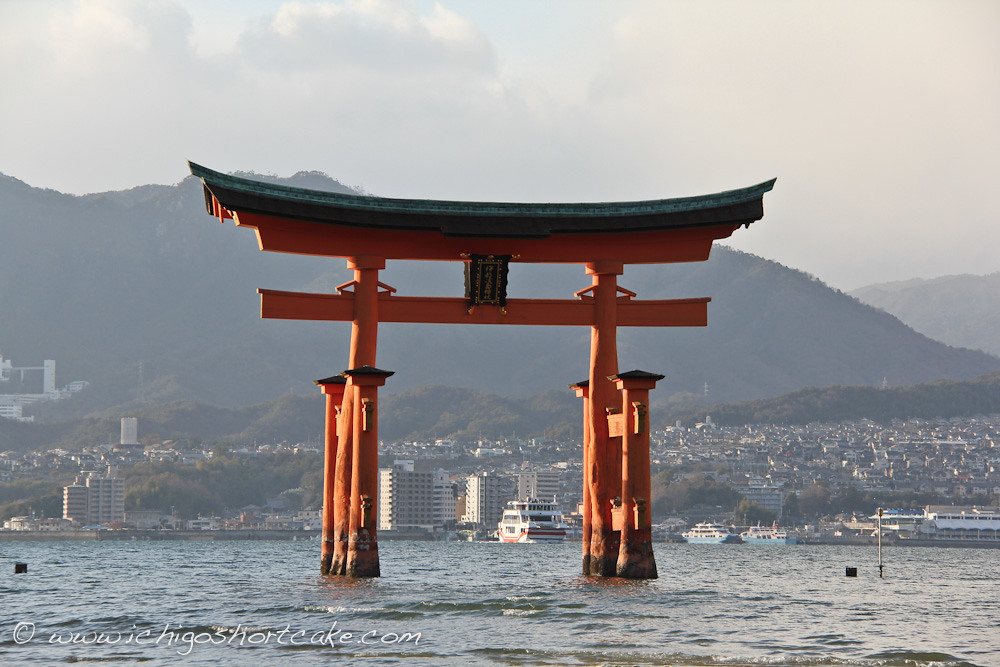
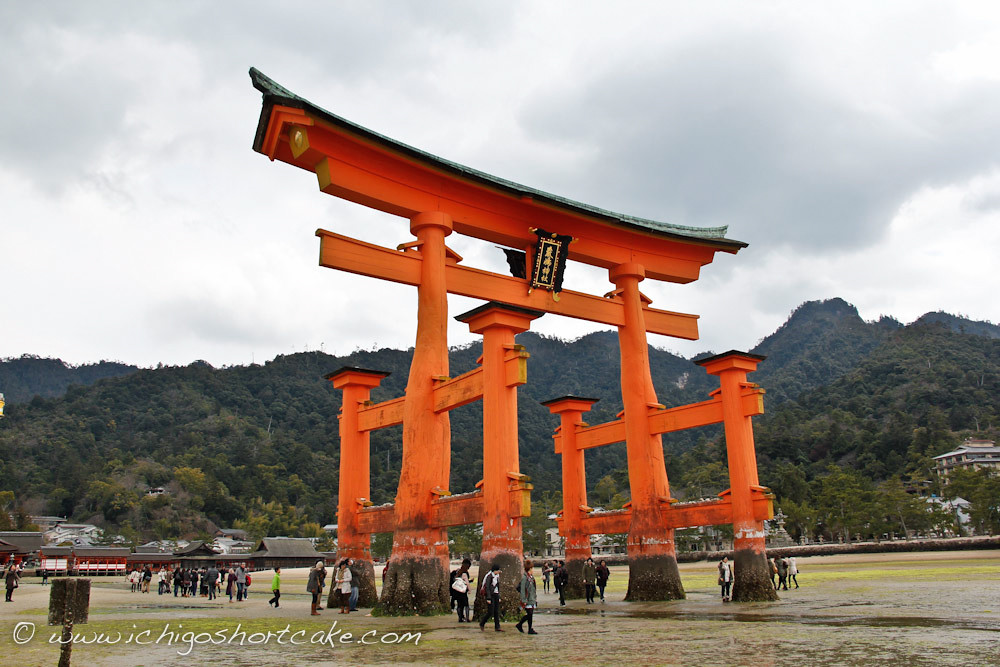
As I mentioned in my earlier post, Miyajima is considered as one of the top 3 views of Japan. The scenery that claims such high praise is the floating torii gate at Itsukushima Shrine. It is a Shinto shrine which is listed as a UNESCO World Heritage Site and many of the buildings are considered Japanese National Treasures. When we saw the shrine on the first day, it was already late afternoon and it was high tide. It meant we couldn't walk out to the famous gate to get a closer glimpse of its glory.


Luckily, our friendly ryokan lady owner informed us of the times of low tide every day so that we were able to walk out onto the ground that otherwise would have been submerged in the ocean. As you can see, seeing the torii gate is free and is what most people visit the island for.


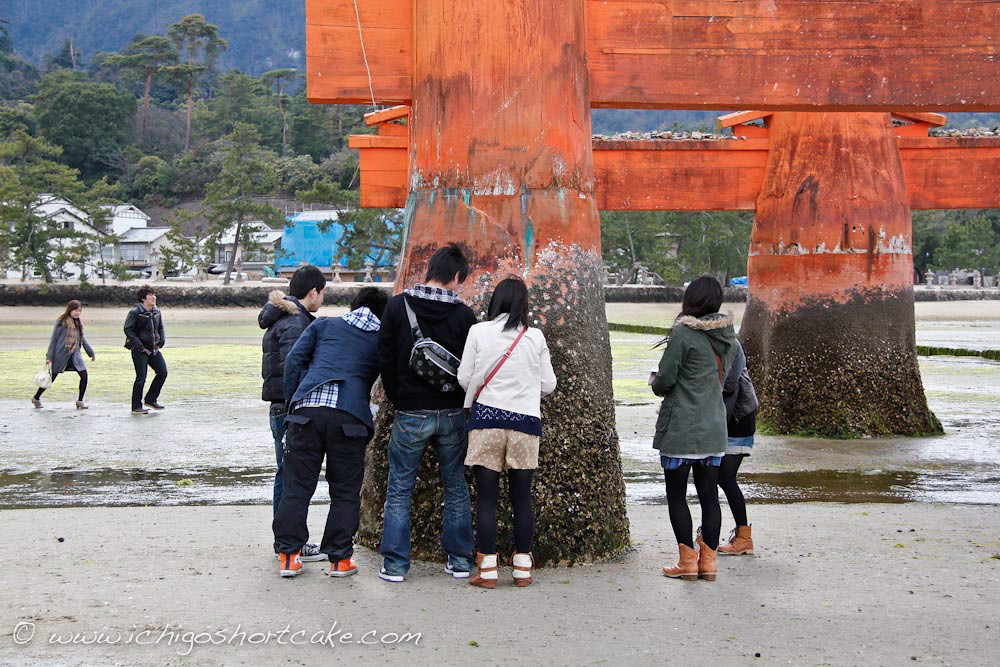
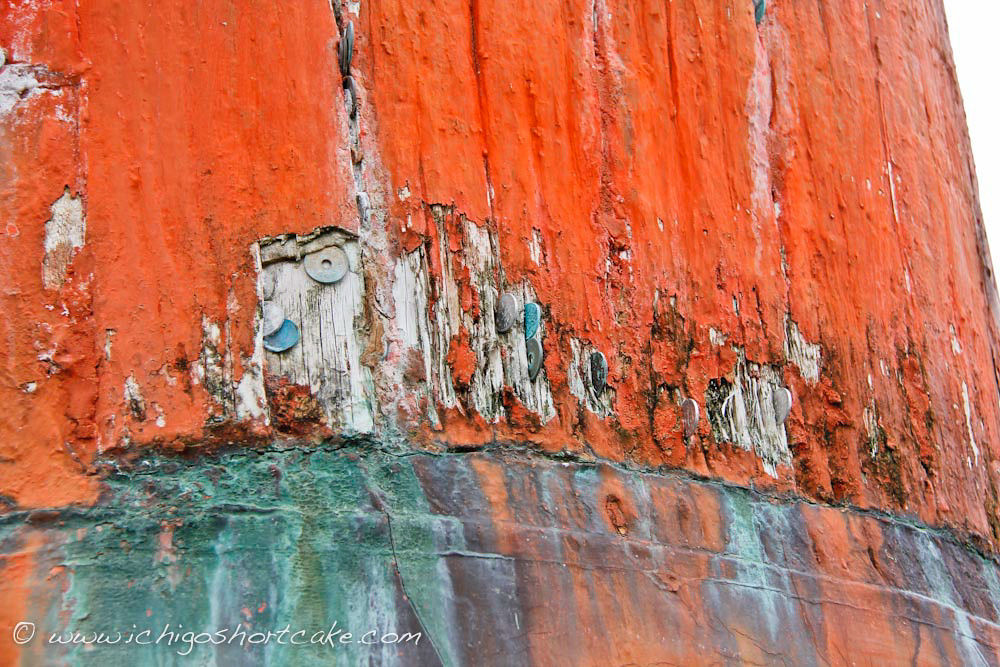
As we walked closer, I saw a fascinating sight. Usually people throw money into ponds or other places with water as a means to attain good fortune. But there were coins stuck amongst the barnacles on the legs of the gate. Some were so disfigured that they must have been there for a very long time, submerged in seawater every day when the tide comes in and others were clearly very new. I saw young people attempting to stick their own coins on but I just couldn't find a space for mine. Ok I lied. I didn't really try to find space, instead of doing that, I preferred to photograph the memorable images of others doing so. It was a lot more valuable than just good fortunes. :)


There were locals crouched around the muddy shores, trying to find fresh edible sea creatures. They were everywhere and it was so interesting to watch. What I didn't like was the mud on my shoes, it was lucky though that I had worn boots, Yuye's shoes were soaked! It was stunning though how the shore disappears into the ocean that separates Hiroshima city and Miyajima. As you can see from the photo below, the buildings you can see across the ocean is in fact Hiroshima. It only takes mere minutes to get across to the island from the mainland via one of the ferries.